Claude Code to Figma: Why This Changes the Design-to-Dev Workflow
Figma just made it easier to go from Claude Code to editable design frames. Here's what it means for dev and design teams.
The gap between code and design has always been a pain point. You build something in code, it looks good in the browser, and then the moment you need to share it or explore variations, you're back to screenshots and Slack messages hoping someone understands the context.
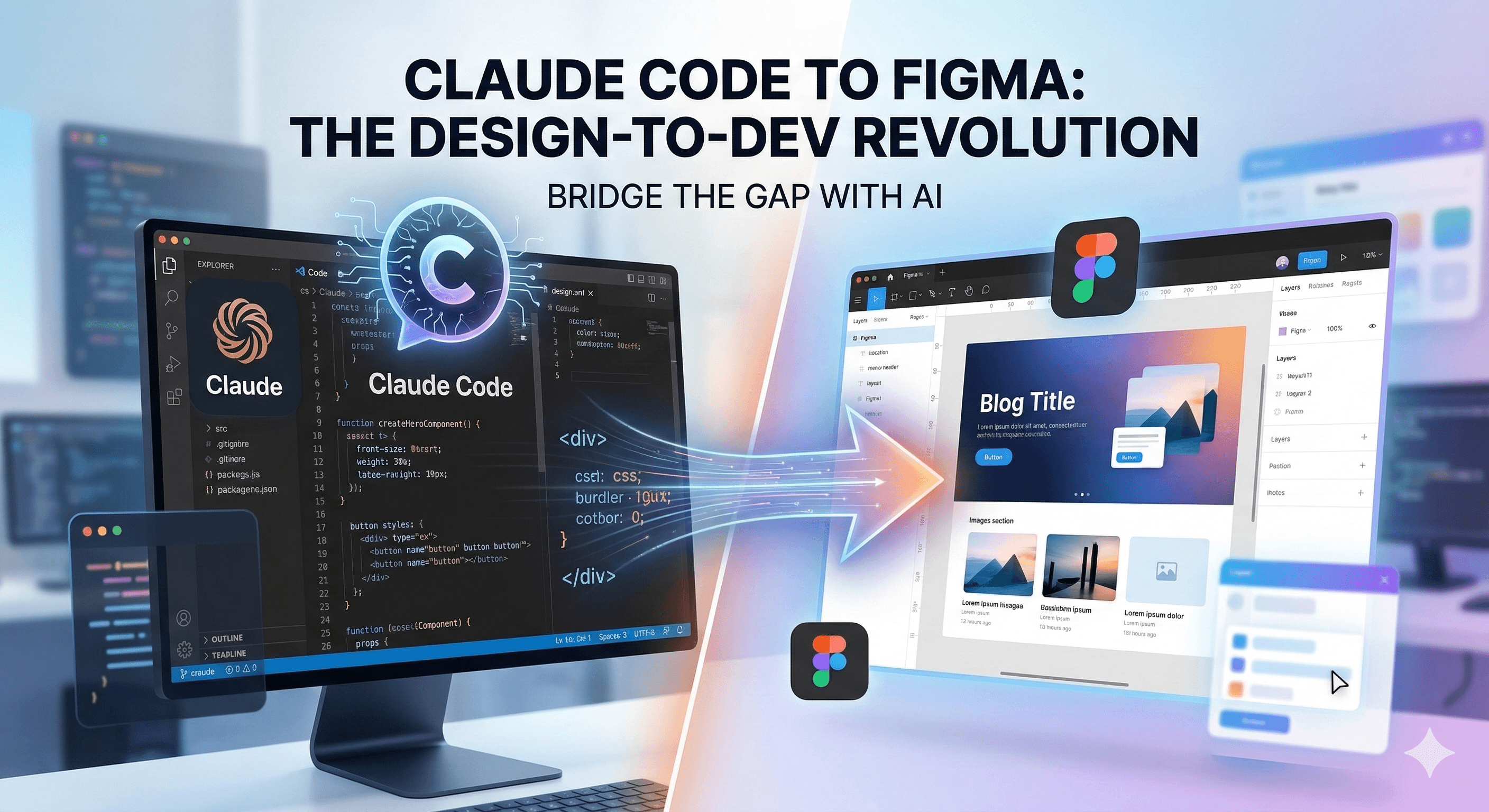
Figma just addressed that with a new integration: Claude Code to Figma lets you capture a real, functioning UI from a browser — whether that's production, staging, or localhost — and convert it into editable frames on the Figma canvas. figma
That's genuinely useful.
So what does it actually do?
The workflow is straightforward. You're building in Claude Code, you have something worth exploring further, and instead of staying in a single-player code environment, you push it into Figma. Each captured screen can be sent or copied to your clipboard and pasted into any Figma file, where it becomes a frame you can organise, duplicate, refine, and share alongside the rest of your design work. figma
The real value here isn't just the capture itself. It's what you can do with it once it's on the canvas. Teams can annotate what's working, call out what's unclear, and explore divergent ideas without needing to ask someone to context switch into a new environment or edit half their code files. figma
For anyone who's managed a design review where someone had to "clone the repo and run it locally" just to see the current state, you already understand why this matters.
The code-to-canvas problem it solves
Code is powerful for converging — running a build, clicking a path, and arriving at one state at a time. The canvas is powerful for diverging — laying out the full experience, seeing the branches, and shaping direction collectively. figma
That framing is spot on. Most teams aren't struggling to build. They're struggling to align fast enough before momentum pulls them in the wrong direction. Getting something into a shared canvas earlier means decisions get made with the right context, by the right people.
Designers, engineers, and PMs can react to the same artefact, with the same context, at the same level of fidelity. figma That kind of shared visibility is where better product decisions actually happen.
And there's a return path too
It's not a one-way bridge. With the Figma MCP server, you can bring work back into a coding environment using a prompt and a link to a Figma frame — a simple, lightweight connection that helps you move from shared understanding back into the build without losing context. figma
Code to canvas, canvas back to code. That's a genuinely improved loop.
What this means for teams using AI in their workflow
Claude Code has been gaining traction as a serious tool for code-first exploration. The ability to pipe that directly into Figma removes one of the last remaining handoff headaches in AI-assisted development. Whether you begin with a prompt in Figma Make or in Claude Code, the goal is the same — get to something tangible, then take it further. figma
For product teams, dev-led agencies, and anyone building interfaces with AI tools, this kind of integration is going to become the expectation, not the exception.
The old "design first, build second" model is already breaking down. Tools like this are what the new workflow looks like in practice.
Want to explore how AI-driven workflows can speed up your own product development? Get in touch with the SocialNerd team.